Biblioteca Salaborsa & its Roman ruins
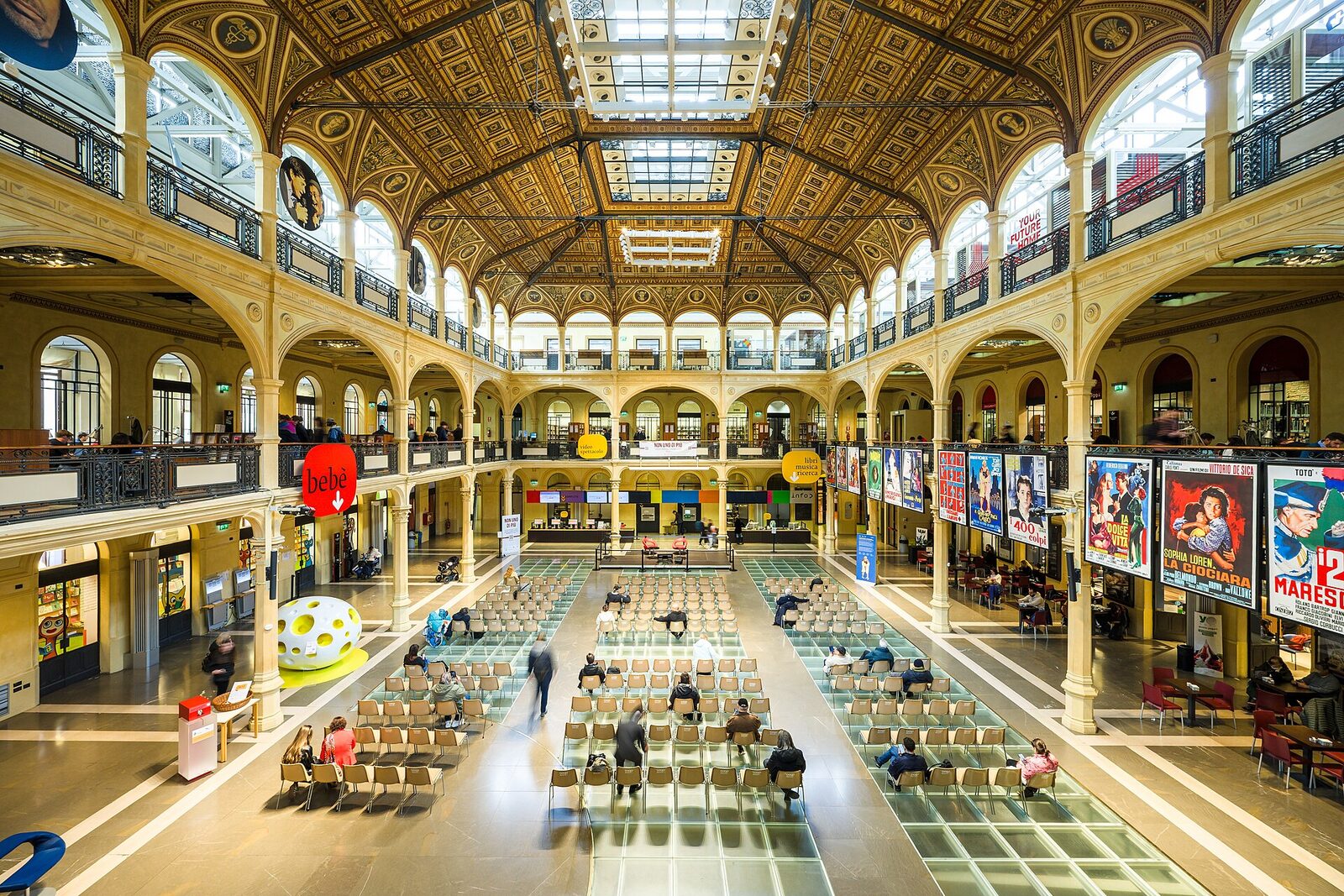
A grand covered hall a step off Piazza Maggiore, with a glass floor that lets you look straight down onto 2,000 years of Bologna stacked underneath. Free to walk in.
The Salaborsa is Bologna's main public library, but you don't need a card or a ticket to enjoy the best part. Walk through the doors off Piazza del Nettuno and you land in a soaring iron-and-glass hall. In the middle of the floor, under a panel of thick glass, the ancient city opens up beneath your feet: Roman pavements, Etruscan walls, layers going back to the Iron Age. It's one of the easiest and most surprising free things to do in the centre.
- What it is
- Public library + glass-floor ruins
- Cost
- Free to enter
- Where
- Piazza del Nettuno, off Piazza Maggiore
- Time needed
- 20–40 minutes
The glass floor and the ruins below
The centrepiece is the Piazza Coperta, the covered square at the heart of the building. Look down through the glass panel in the middle and you're staring at the scavi, the archaeological dig that runs underneath the whole hall. What you see is layered: the foundations of Roman Bononia, an early basilica, a forum street, and below that traces of Etruscan Felsina and a Villanovan settlement older still. People have lived and built on this exact spot for the better part of three thousand years, and here you get to look straight into the stack.
You can also go down into the dig itself. A staircase leads to the basement level where the excavation is open for closer viewing, with panels explaining what each set of stones was. It's quiet, it's cool in summer, and it's the kind of thing most visitors walk right past without realising it's there.
Local tip
The basement archaeological area keeps shorter and more variable hours than the main hall, and it sometimes closes for events or staffing. If the ruins under the glass are the reason you're coming, check the official Salaborsa or Bologna Welcome site for the current opening times before you go. The view through the glass floor at ground level is always there during library hours.
A building with many past lives
The hall has been almost everything over the years. It sits inside Palazzo d'Accursio, the city hall complex on the square. The space has served as a botanical garden, then the city's stock exchange (the Borsa, which is where the name comes from), and at one point even a basketball court. In 2001 it reopened as a modern multimedia library, and the architects built the whole thing around the dig they found underneath. The result is a working public library where kids do homework and locals read the paper, suspended over a Roman street.
What else to do inside
- Climb to the upper galleries that ring the hall for a top-down view of the glass floor and the whole space.
- Step out onto the terrace of the adjoining tower if it's open, for a quick rooftop look over the rooftops.
- Use the free toilets and the calm, air-conditioned reading rooms. In high summer this is a genuine rest stop in the middle of a hot day of sightseeing.
- Browse the international newspaper section and the kids' area if you're travelling with children who need a break.
Getting there
You can't really miss it. The entrance faces Piazza del Nettuno, right beside the Neptune Fountain and a few steps from the main square. From Bologna's central piazza it's under a minute on foot. Pair it with the unfinished basilica that dominates the square, then walk five minutes east to the leaning Asinelli tower or duck into the food lanes of the old market quarter.
See it with a guide who reads the layers
A walking tour of the centro storico ties the Salaborsa ruins together with the Roman grid still buried under the modern city, and usually folds in the towers and Piazza Maggiore in one go.
Browse Bologna city toursWhy it's worth 30 minutes
Bologna hides its history in plain sight. The same impulse that gave the city its 62 kilometres of UNESCO porticoes and Europe's oldest university shows up here, in a free public library that casually displays a Roman road through the floor. If you like the under-the-surface side of the city, follow it up with the carved wooden anatomical theatre at the Archiginnasio, the stacked medieval chapels of Santo Stefano, or the surviving canal window at the Finestrella di Via Piella.