The Porticoes of Bologna
Roughly 62km of covered arcades thread through Bologna. They keep you dry, they keep you shaded, and since 2021 they're a UNESCO World Heritage Site. Here's how to read them as you walk.
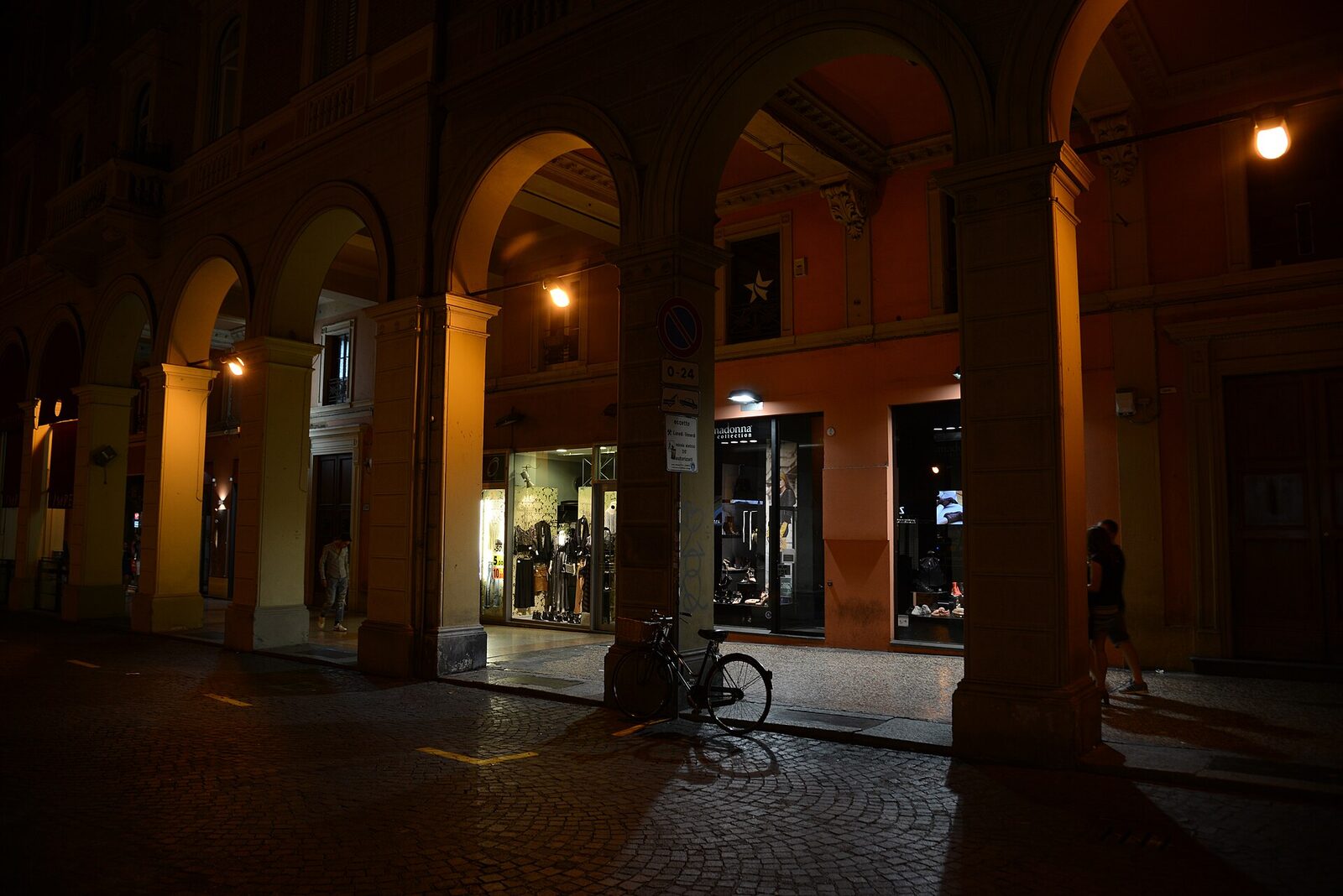
The first thing you notice in Bologna is that you barely need an umbrella. The whole historic centre is stitched together by porticoes, covered walkways that run along the front of the buildings, and you can cross most of the city without stepping into the rain or the August sun. There are about 62 kilometres of them in total. In 2021 UNESCO inscribed the twelve most important stretches as a World Heritage Site, which is why you'll see "City of Porticoes" on every postcard.
You don't visit the porticoes the way you visit a museum. You walk through them all day without thinking about it. But a few are worth slowing down for, and knowing the story makes the whole city click into place.
- Total length
- ~62 km
- UNESCO listed
- 2021, 12 stretches
- Oldest examples
- 13th century, wooden
- Longest single run
- San Luca, 3.8 km
On this page
Why a whole city is under cover
Blame the students. When the University of Bologna got going in 1088, the oldest university in continuous operation in Europe, it pulled in scholars from all over the continent and the city ran out of room. The fix was cheap and clever: extend the upper floors of houses out over the street on wooden posts, and rent out the new rooms. The ground floor underneath became a public passage by default.
By the 13th century the city made it official, and at points compulsory. New buildings had to include a portico tall enough for a person on horseback to pass under, and the covered space stayed open to everyone even though the building above was private. That's the part that earned the World Heritage status. The porticoes are private property that has functioned as shared public space for the better part of a thousand years.
What the UNESCO listing actually covers
The 2021 inscription didn't list all 62 kilometres. It picked twelve representative stretches that show the range of styles and periods, from rough medieval timber to grand stone arcades to a 1950s social-housing project. The list includes Piazza Santo Stefano, the academic porticoes of Via Zamboni, Strada Maggiore, the Pavaglione and Piazza Maggiore, Via Farini and Piazza Cavour, Via Galliera, the Baraccano, the MAMbo stretch, Santa Caterina, the Barca district, plus the two long pilgrimage routes out to the San Luca sanctuary and the Certosa cemetery.
You'll walk several of these without trying, because they sit right on the main tourist axis. The trick is to notice them.
The porticoes worth slowing down for
The Pavaglione, Piazza Maggiore
The grand stone arcade running along the south side of the main square, past the Archiginnasio, is the Pavaglione. It's about 139 metres of high vaulted ceiling and the spot where Bolognesi traditionally go for the evening stroll and a bit of window shopping. Start here. It's the most photographed stretch and the easiest to reach.
Strada Maggiore and Casa Isolani
Strada Maggiore, running east from the Two Towers area, is a lesson in styles from every century lined up on one street. The standout is Casa Isolani, a 13th-century house with one of the city's oldest surviving wooden porticoes, held up on tall timber posts close to ten metres high. Look up at the ceiling and you may spot the old legend, three arrows said to be embedded in the beams. Across town, the archbishop's palace on Via Altabella keeps Bologna's tallest portico of all.
Via Zamboni, the university quarter
Walk Via Zamboni into the student district and the porticoes change character again, lined with palazzi and the Renaissance arcade of the Basilica di San Giacomo Maggiore. On nearby Via Marsala you'll find rare wooden "crutch" porticoes with their distinctive forked supports. This is the most alive stretch in the evening, full of students spilling out of bars.
The Portico di San Luca
The famous one. The Portico di San Luca climbs 3.8 kilometres and 666 arches from the edge of town up the Colle della Guardia to a hilltop church. It's the world's longest portico and a proper walk, about 40 to 50 minutes uphill, but it's covered the whole way and the view at the top is the payoff.
Local tip
Porticoes were built for weather, so use them like a local does. On a rainy day you can cross most of the centro storico dry. In high summer, stick to the shaded side of the street and you'll save yourself from the worst of the heat. The covered walk up to San Luca is genuinely the smart way to do that hike when it's hot.
Walking the porticoes yourself
There's no ticket and nothing to book. The porticoes are just the streets, open all day every day. A self-guided loop of the best central stretches takes a couple of hours: start at the Pavaglione on Piazza Maggiore, head out along Strada Maggiore to Casa Isolani, loop back through the Quadrilatero market lanes, and finish on Via Zamboni. Add the San Luca climb as a separate half-day.
If you'd rather have the history filled in as you go, a walking tour of the centre covers the main arcades alongside the towers, the squares and a food stop, and it's an easy way to get oriented on your first morning.
See the porticoes with a local guide
Guided walks of Bologna's centro storico weave the UNESCO arcades together with the main sights, so you learn what you're looking at instead of just walking under it.
Browse Bologna walking toursWhere to stay near the best porticoes
Base yourself anywhere inside the centro storico and the porticoes are your front door. Staying near Piazza Maggiore puts you on the Pavaglione and a short covered stroll from almost everything in this guide.
Stay inside the porticoed centre
Hotels in the historic core mean covered walks to the squares, the towers and the market lanes whatever the weather.
Find hotels in central BolognaFrom the arcades it's an easy walk to the rest of the city. See the full list of things to do in Bologna, find out where to eat the real ragù, sort out where to base yourself, and check getting around on foot. Heading further? Browse the day trips from Bologna.