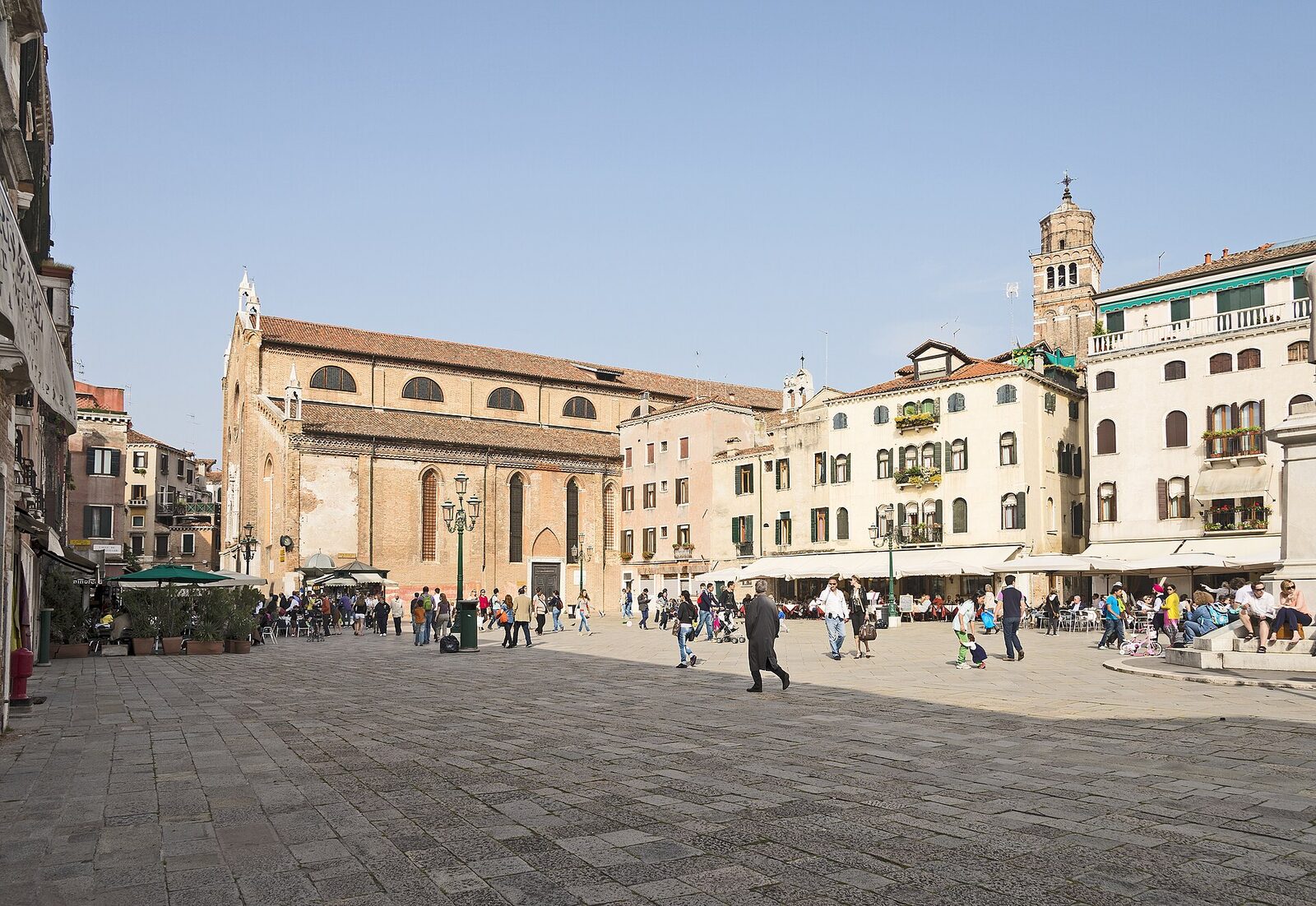
Santo Stefano: Bologna’s Seven Churches
A maze of interlocking chapels around a silent medieval courtyard, built and rebuilt for 1,500 years. The most atmospheric spot in the city, and it's free to walk in.
Locals call it Le Sette Chiese, the Seven Churches. What you actually find at Santo Stefano is a knot of four interconnected buildings that grew on top of each other since Roman times, wrapped around a courtyard so quiet you'll forget you're two minutes from the towers. Entry is free, the crowds are thin, and it's the one stop in Bologna that rewards going slow.
- Where
- Piazza Santo Stefano
- Entry
- Free (donations welcome)
- Open
- Daily, roughly 8am–7pm
- Time needed
- 45–60 min
Why "Seven Churches"
The plan was always copycat Jerusalem. In the 5th century the bishop Petronius, the same Petronius the city's big unfinished basilica is named for, set out to rebuild the holy sites of Christ's passion right here in Bologna, on top of an old pagan temple to Isis. The result was a small stage-set of the Holy Land: a Sepulchre, a courtyard standing in for Pilate's, and a cluster of chapels that pilgrims could walk like a miniature pilgrimage.
Over the centuries some were swallowed, some rebuilt, some lost. Seven became the legend; four are what you walk through today. Don't go counting doors and feeling cheated. The point is the layering, the way one century leans on the last.
What you actually walk through
There's no single front door and no logical route, which is half the charm. Wander and let the rooms hand you off to each other.
- Church of the Crucifix, the largest of the four and usually where you enter from the square. Plain, raised, with a crypt below.
- Church of the Holy Sepulchre, the heart of the whole idea, an octagonal building modelled on the tomb of Christ in Jerusalem. Petronius himself is buried under the central structure.
- Saints Vitale and Agricola, the oldest church here, raised over the tombs of Bologna's first Christian martyrs. Look at the columns: they're recycled Roman, no two quite alike.
- The Trinity (or Martyrium), opening onto the courtyard, home to a life-size carved wooden Nativity that dates back to the 1200s.
Pilate's Courtyard and the cloister
The bit people remember is the Cortile di Pilato, an open court with a stone basin at its centre, donated by Lombard kings more than a thousand years ago. The name comes from the old idea that this stood in for the courtyard where Pilate washed his hands. Off it sits the Benedictine cloister, a double-tiered Romanesque loggia that gets named among the finest in Italy. The carved capitals on the upper columns are all different, and according to local legend Dante used to sit here to think while he was in Bologna.
Local tip
Come early or near closing, on a weekday. Around 8.30am the courtyard is empty and the light cuts low across the cloister columns. Avoid mass times, when chunks of the complex shut to visitors. There's a small museum off the cloister with relics and art from the lost churches; it costs a few euros and is worth it only if you've already fallen for the place.
The square itself
Don't rush off once you step back outside. Piazza Santo Stefano is a triangular, porticoed pedestrian space, one of Bologna's prettiest, and it earns a coffee at one of the cafe tables facing the church. On some weekends an antiques and vintage market fills it, and through the year it hosts concerts and small festivals. It's also the polite, slow end of the centro storico, away from the student crush around the towers.
Getting there
Santo Stefano sits at the end of its own short street, Via Santo Stefano, a five-minute stroll southeast of the main square. From the Asinelli tower at Porta Ravegnana, head down Via Santo Stefano and the porticoes funnel you straight to the piazza. Strada Maggiore runs roughly parallel one block north if you'd rather loop back a different way. Everything here is flat and walkable; see getting around Bologna if you're coming from further out.
Pair it with
This corner strings together easily. From the complex you're minutes from the carved-wood anatomical theatre at the Archiginnasio, the market lanes of the Quadrilatero, and Giambologna's Neptune fountain. Hungry after? The covered stalls of Mercato di Mezzo are a short walk, or read the full rundown of where to eat in Bologna. With more time, the climb up the world's longest covered walkway to San Luca makes a good half-day.
See it with someone who knows the layers
Santo Stefano makes a lot more sense with context. A guided walk of the centro storico ties the Seven Churches to the towers, Piazza Maggiore and the food lanes, and fills in the 1,500 years you can't read off the walls.
Browse Bologna walking toursStaying nearby
The streets around Santo Stefano are some of the calmest places to base yourself in the old town, walking distance to everything but a notch quieter at night. Compare what's open near the square, then see the full picture in where to stay in Bologna.
Stay in the quiet end of the centro storico
Rooms around Piazza Santo Stefano put you minutes from the towers and the market, with porticoes for the rain and far less noise after dark.
Check hotels near Santo Stefano