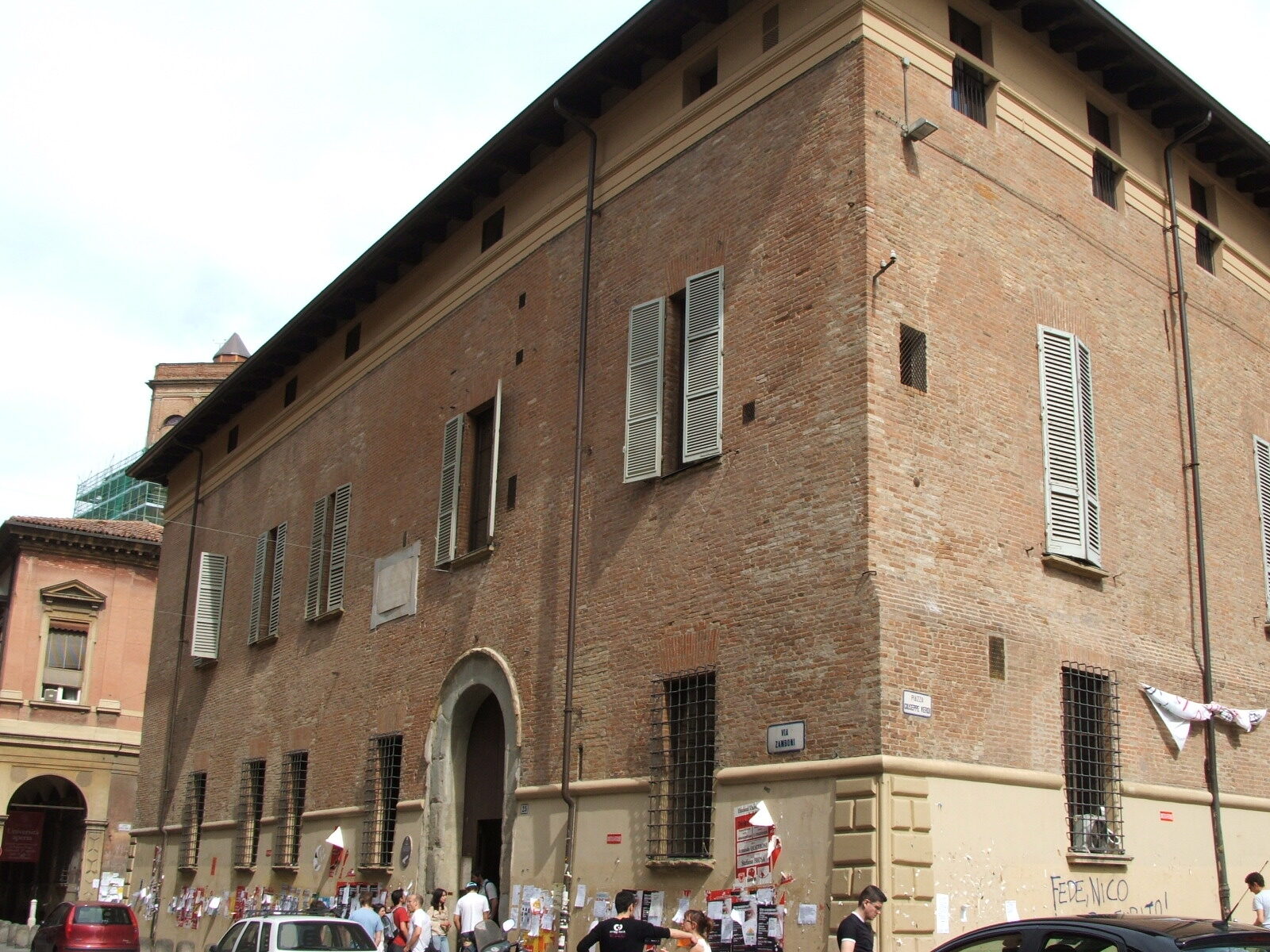
University of Bologna: Europe's oldest university
Founded in 1088, the Alma Mater Studiorum is the oldest university in continuous operation in the Western world, and you can still walk through its frescoed halls and odd, brilliant museums.
The University of Bologna isn't a single campus you tour. It's a living institution woven into the streets east of Piazza Maggiore, with roots going back to 1088. That makes it the oldest university in continuous operation in Europe, and the reason Bologna is nicknamed la Dotta, "the learned one." Students have argued, drunk and graduated here for nearly a thousand years, and the city still moves to their rhythm.
- Founded
- 1088
- Nickname
- Alma Mater Studiorum
- Main quarter
- Via Zamboni
- Walk from centre
- About 10–15 min
Why it matters
Most medieval universities grew out of a cathedral or a king's decree. Bologna worked the other way around. It started as a guild of students who hired and paid their own teachers, mainly to study Roman law. That bottom-up model spread across the continent and shaped what a university even means. Dante studied here. So, later, did Copernicus and Erasmus. The official Latin name, Alma Mater Studiorum, is where the English phrase "alma mater" comes from.
You won't find a ticket booth marked "University of Bologna." What you'll find instead is a cluster of historic buildings, museums and porticoed streets where the institution lives. Here's how to see the best of it on foot.
Palazzo Poggi: the main museum to visit
If you only step inside one university building, make it Palazzo Poggi on Via Zamboni 33. A 16th-century palace covered in Mannerist frescoes, it has been the seat of the university since the early 1800s and now holds the Musei di Palazzo Poggi. This is one of the strangest, most rewarding museums in the city.
Inside you'll find the old teaching collections gathered into a single building: 18th-century anatomical and obstetric wax models that are genuinely unforgettable, Ulisse Aldrovandi's natural history cabinet, antique ship models, military maps and early physics instruments. It's part art gallery, part science attic, part medical curiosity show. Admission to the permanent collections is generally free, but hours shift around the academic calendar, so check the official Bologna Welcome listing before you go.
Local tip
On the ground floor of Palazzo Poggi the Alma Mater Room is a free multimedia space that walks you through the university's thousand-year story in about 20 minutes. It's a good first stop if you want context before the older buildings. Keep your voice down on Via Zamboni mid-morning, these are working faculties, and you'll wander past students heading to lectures.
The Archiginnasio and the anatomical theatre
Before Palazzo Poggi, the university's first purpose-built home was the Archiginnasio, finished in 1563 just behind the Basilica di San Petronio. Its walls and ceilings are smothered in thousands of carved and painted coats of arms left by past students. The showpiece is the carved-wood anatomical theatre, a small tiered room where public dissections were once performed under a canopy of statues. Read our full guide to the Archiginnasio and its anatomical theatre for hours and how to get in.
Walking the university quarter
The student heart of the city runs along Via Zamboni, which starts at the leaning Two Towers and heads northeast under long porticoes. This is where you feel the university most: bookshops, cheap aperitivo bars, faculty entrances and Piazza Verdi spilling over with students. Off Via Zamboni you'll find more pieces of the institution worth a look:
- The University Library (BUB) inside Palazzo Poggi, with its grand Aula Magna. Free guided visits run if you book ahead.
- La Specola, the old astronomical observatory tower, now a small museum of historic instruments.
- The Orto Botanico on Via Irnerio, one of the oldest botanical gardens in Europe.
- MAMbo and the Pinacoteca sit nearby, making this corner an easy half-day of museums.
How to plan your visit
Give the area at least a half day. A sensible loop: start at the towers, walk up Via Zamboni, do Palazzo Poggi, then double back through the centre to fit the Archiginnasio behind San Petronio. The buildings are spread out but all within an easy walk, and most of the route is covered by the city's famous porticoes, so it works rain or shine. For the wider context of that arcade network, see our guide to the UNESCO-listed porticoes.
Opening times follow the academic year and can change without much notice, so confirm hours on the official channels the day before. Some buildings close to visitors during exam periods and graduations.
See the university with a guide
A walking tour of the centro storico is the easiest way to get into the historic university buildings without juggling separate bookings, and a good guide brings the 900-year backstory to life. Many tours pair the university quarter with the towers and Piazza Maggiore.
Browse Bologna walking toursStaying nearby
If you want to wake up in the thick of student Bologna, look for rooms around Via Zamboni and Piazza Verdi. It's lively (sometimes loud at night), central and walkable to everything in this guide. For quieter options and a full breakdown of districts, see where to stay in Bologna.
Hotels in the university quarter
Base yourself near Via Zamboni and you're a short walk from the towers, the food markets and Piazza Maggiore.
Find stays near the universityEat where the students eat
The quarter around Via Zamboni is built for student budgets, which is good news for you. Cheap piadine, packed aperitivo spots and trattorie serving the real thing, remember, the local pasta is tagliatelle al ragù, not "spaghetti bolognese." For the proper version and where to find it, see where to eat in Bologna and the lanes of the Quadrilatero market district.
Nearby in the centro storico
The university sights slot neatly into a day among Bologna's classics. From here it's minutes to the main square, the climbable Asinelli Tower, the quiet courtyards of Santo Stefano and the covered stalls of the Mercato di Mezzo. Got a free day after that? Consider one of the easy day trips from Bologna.