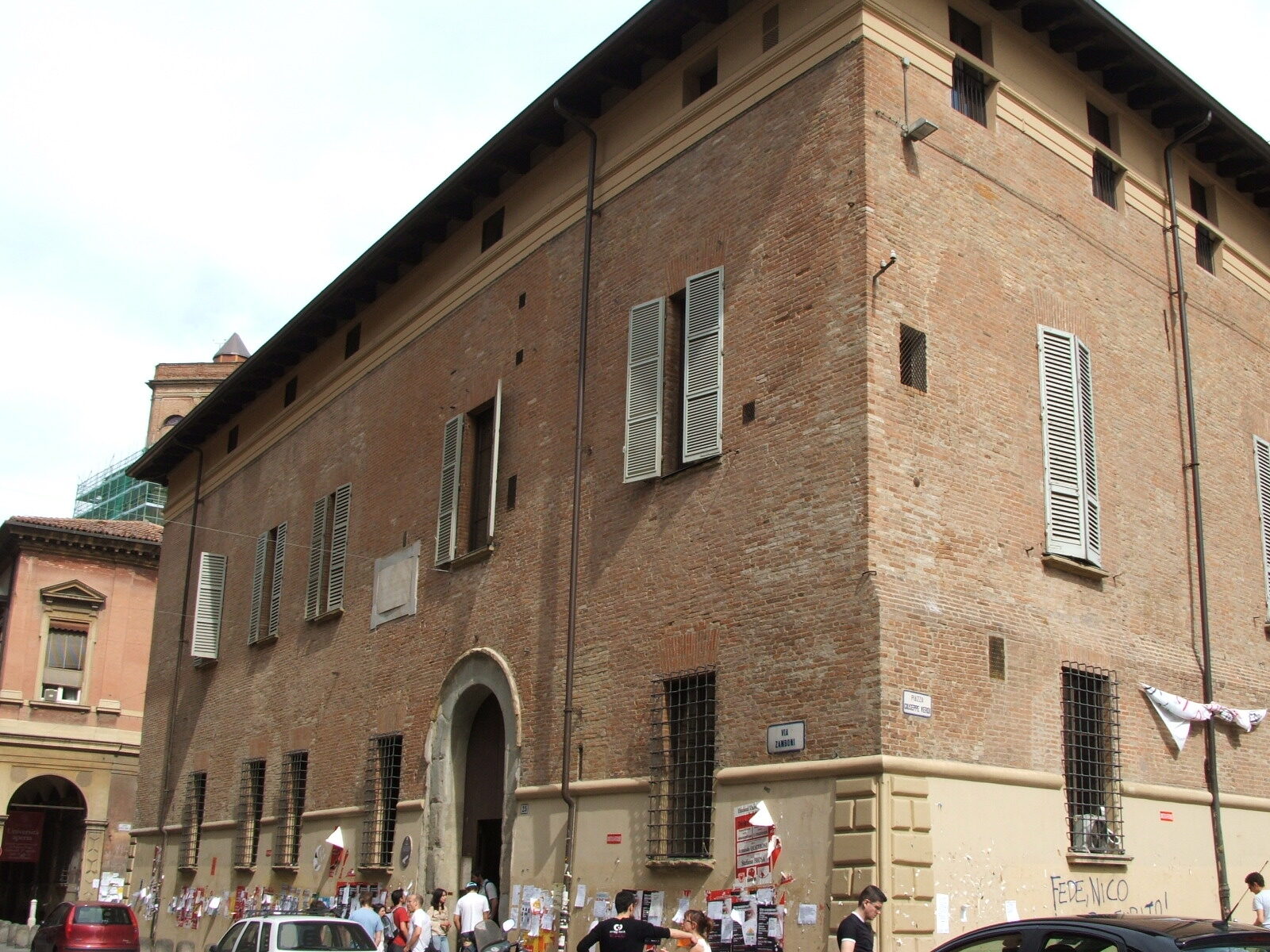
Palazzo Poggi: the university's cabinet of curiosities
Bologna's strangest, best museum hides inside the old seat of the world's oldest university, wax anatomy, model ships, terracotta wombs and frescoed ceilings, all in one 16th-century palace.
If you only have time for one museum in Bologna, make it Palazzo Poggi. It's the historic home of the University of Bologna, and inside it the 18th-century Institute of Sciences packed every branch of learning into a single building: anatomy, obstetrics, natural history, physics, geography, military engineering. Wander the rooms and you're basically walking through the original Enlightenment idea of "all human knowledge under one roof."
- Where
- Via Zamboni 33, university quarter
- Closed
- Mondays (check holiday dates)
- Time needed
- 1 to 2 hours
- Good for
- Science, art, rainy days, curious kids
What "Wunderkammer" actually means here
A Wunderkammer is a cabinet of curiosities, the kind of cram-everything-in collection that European princes and scholars built before museums split into neat categories. Palazzo Poggi is the real thing rather than a recreation. The collections were assembled in the 1700s for the Institute of Sciences and never got pulled apart into separate modern museums, so you get the genuine jumble: a stuffed crocodile near a globe near a wax cadaver. That's the charm.
The anatomical waxes (the famous bit)
The rooms people come for are the anatomical and obstetric collections. The wax models date to the 18th century, after the future Pope Benedict XIV, then archbishop of Bologna, saw the early work of the anatomist Ercole Lelli and bankrolled the collection. Some figures lay wax muscle and sinew straight over real human bone. The obstetrics room is more unsettling still: rows of terracotta and wax models showing every stage and complication of childbirth, made to train midwives in an age before photography. It's clinical, beautiful and a little macabre all at once.
Local tip
The anatomy rooms can be intense for young children or the squeamish. If that's you, start with the ship models and the natural history hall and skip ahead, or just breeze through the medical rooms quickly. Nothing forces you to linger.
Ships, maps and Aldrovandi's natural world
Past the medical rooms the mood shifts. There's a hall of finely built 16th and 17th-century model ships and old nautical maps, displayed for the navigation and geography lessons of the day. Another highlight is the natural history collection of Ulisse Aldrovandi, the Bolognese naturalist who basically invented the modern natural history museum. His painted watercolor plates, dried specimens, minerals and fossils still sit alongside the printed volumes they illustrated.
Don't rush past the ceilings
Half the pleasure here is the building. The palace was frescoed in the mid-1500s by artists of the Bolognese school, and several rooms keep their original painted ceilings and walls. The physics rooms hold antique scientific instruments, including an 18th-century electrostatic generator, set against all that Renaissance decoration. Look up as often as you look in the cases.
Hours, tickets and how to visit
The museum sits at Via Zamboni 33, in the heart of the university district. It typically opens late morning through the afternoon and closes on Mondays, with a handful of holiday closures through the year. Ticket prices are modest, with reduced rates for students and over-65s and free entry for University of Bologna students and staff and under-19s. Times and prices shift, so check the official Palazzo Poggi / University Museum Network page before you go and book ahead if you're visiting during a busy exhibition.
See it with a guide who knows the stories
The collections make far more sense with context, and several Bologna walking tours fold the university quarter and its museums into a half-day route. Handy if you'd rather not piece the history together yourself.
Browse Bologna tours & ticketsWhat's nearby
You're a few minutes' walk from the leaning Asinelli tower (book that climb in advance, it sells out). The carved wooden anatomical theatre at the Archiginnasio pairs perfectly with Palazzo Poggi if you've caught the anatomy bug, and the porticoed Via Zamboni runs straight back toward the city's main square and the unfinished San Petronio basilica. The whole stretch is part of Bologna's UNESCO-listed porticoes.
When the museum stops and your stomach starts, the student bars and trattorias around Via Zamboni are some of the best-value places to eat in the city. Planning the rest of your visit? Slot the museum into your Bologna sightseeing list and check how to move around the centro storico on foot.