Classic
Market & tasting walk
The standard 3–4 hour small-group walk through the Quadrilatero with six to nine tastings: cheese, mortadella, fresh pasta, wine, sometimes gelato.
What's tasted →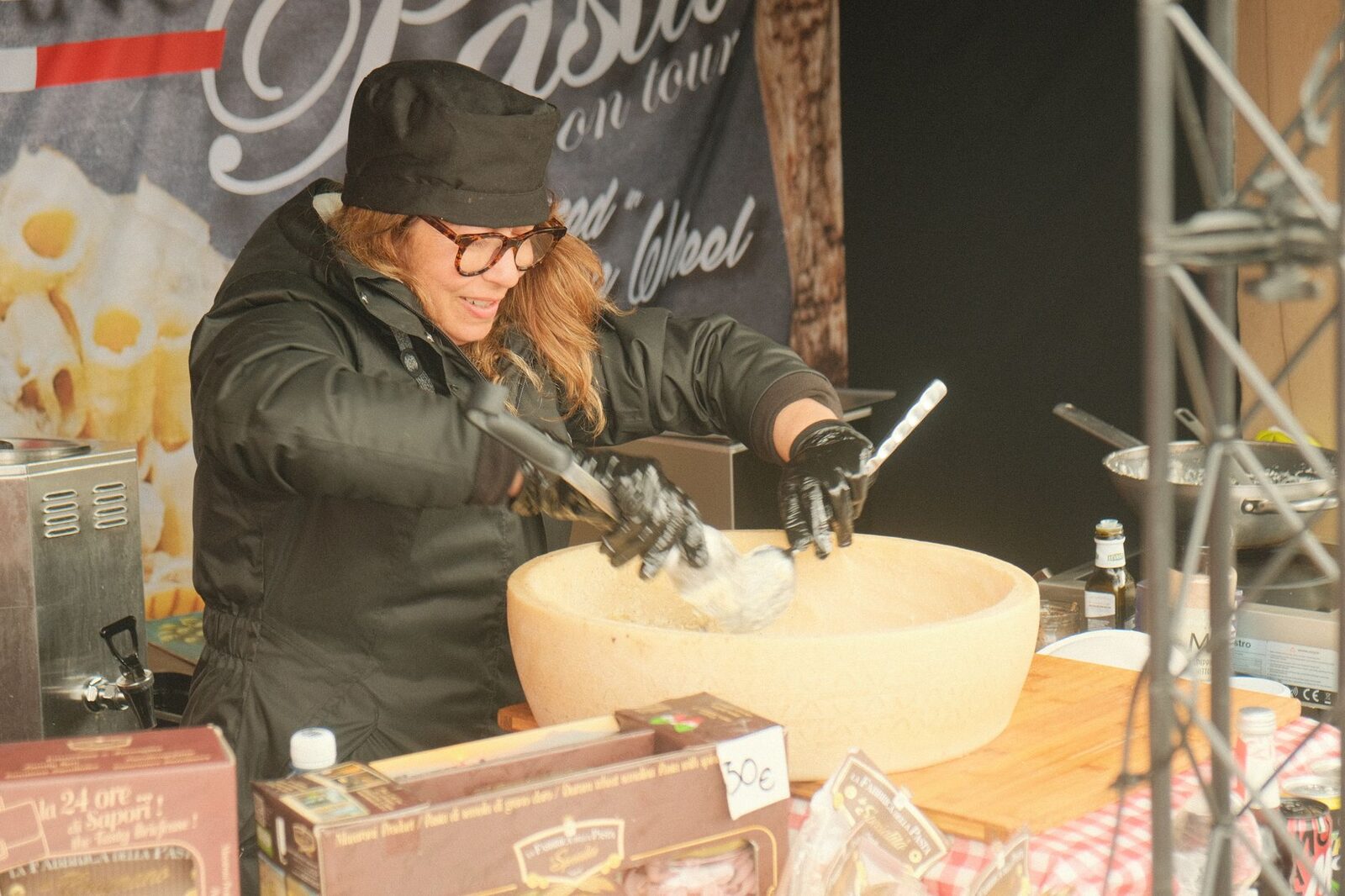
Bologna is the easiest food city in Italy to eat your way through, and a good tour walks you past the queues straight to the people who slice the mortadella and roll the tortellini by hand.
A Bologna food tour is the fastest way to understand why this region is called la Grassa, "the fat one." Over three or four hours you taste your way through the medieval market lanes, Parmigiano Reggiano aged in stages, mortadella sliced fresh off the cylinder, hand-rolled tortellini, real ragù, and balsamic from Modena dripped off a spoon. A good guide does the ordering, tells you what you're eating, and gets you into shops you'd walk straight past on your own.
This page sorts out the main types of tour, what they actually include, and how to choose. Once you know the pasta itself, dig into the real tagliatelle al ragù and why spaghetti bolognese isn't an Italian dish at all.
On this page
If you've got one full day in Bologna and want to eat well without guessing, yes. The centro storico is packed with both genuine salumerias and tourist traps, and they sit two doors apart. A guide cuts out the bad calls, explains the difference between a 12-month and a 36-month Parmigiano, and usually times the walk so you're tasting cured meats at a counter that's been open since the 1800s rather than queuing at the obvious place on the corner. If you'd rather do it yourself, the restaurant picks and the market guide will get you most of the way there.
Most "Bologna food tour" listings fall into a few clear buckets:
The standard 3–4 hour small-group walk through the Quadrilatero with six to nine tastings: cheese, mortadella, fresh pasta, wine, sometimes gelato.
What's tasted →Less walking, more flour. You roll your own tortellini or tagliatelle with a sfoglina, then eat it. A different experience from a tasting tour.
Cooking classes →A full-day run out to a Parmigiano dairy, a balsamic acetaia in Modena, and a Parma ham producer. Production rooms, aging cellars, tastings, often lunch.
Day trips →There's also a private option for most of these, which costs more but lets you set the pace and skip the small-group choreography. Worth it for a group of four or more, or anyone who hates standing around waiting.
On a typical city tour you stand and graze rather than sit for a meal. Expect most of these to turn up:
Local tip
Come hungry but skip a big breakfast. Most tours add up to a full lunch's worth of food across the stops, and the better ones build in a sit-down ragù plate near the end. If you have dietary needs, flag them when you book, many of the marquee tastings are pork and dairy, so vegetarian and gluten-free swaps need notice.
Time of day changes the tour more than you'd think. Morning departures (around 9:30–10am) catch the Quadrilatero market while it's still a working market full of locals, and they lean toward pasta-making and produce. Afternoon tours (2–3pm) skew toward cured meats, cheese and wine, with a more relaxed aperitivo feel. If you only do one and you love wine, go afternoon; if you want to watch pasta being made, go morning.
Either way you'll cover the same medieval grid of lanes between Via Rizzoli and the Mercanzia. For the history behind that market and how to wander it solo afterwards, see the food markets guide.
City tours run most days but small groups fill up, especially on weekends and through spring and autumn, so book a few days ahead rather than walking up. Check the official operator listing for exact start times and current prices before you commit, and confirm the meeting point, most start near Piazza Maggiore or the towers. Wear comfortable shoes for the cobbles, and don't plan a heavy dinner reservation for the same evening.
Compare small-group market walks, pasta classes and full-day Food Valley trips, with current times, prices and reviews in one place.
See food tours & tastingsA tour is the on-ramp, not the whole trip. After it, book a table at one of the old-school trattorias, work out where to eat well on a budget with the cheap eats guide, and slot in a proper Bologna aperitivo before dinner. Finish the day with a cone from the best gelaterias or a stop at one of the historic cafés. If you'd rather get your hands floury, the pasta-making classes are the natural next step.
Need to fit it into a wider plan? See the full eat and drink guide, the things to do list for the rest of the city, and getting around Bologna for reaching the meeting point and the Food Valley producers.