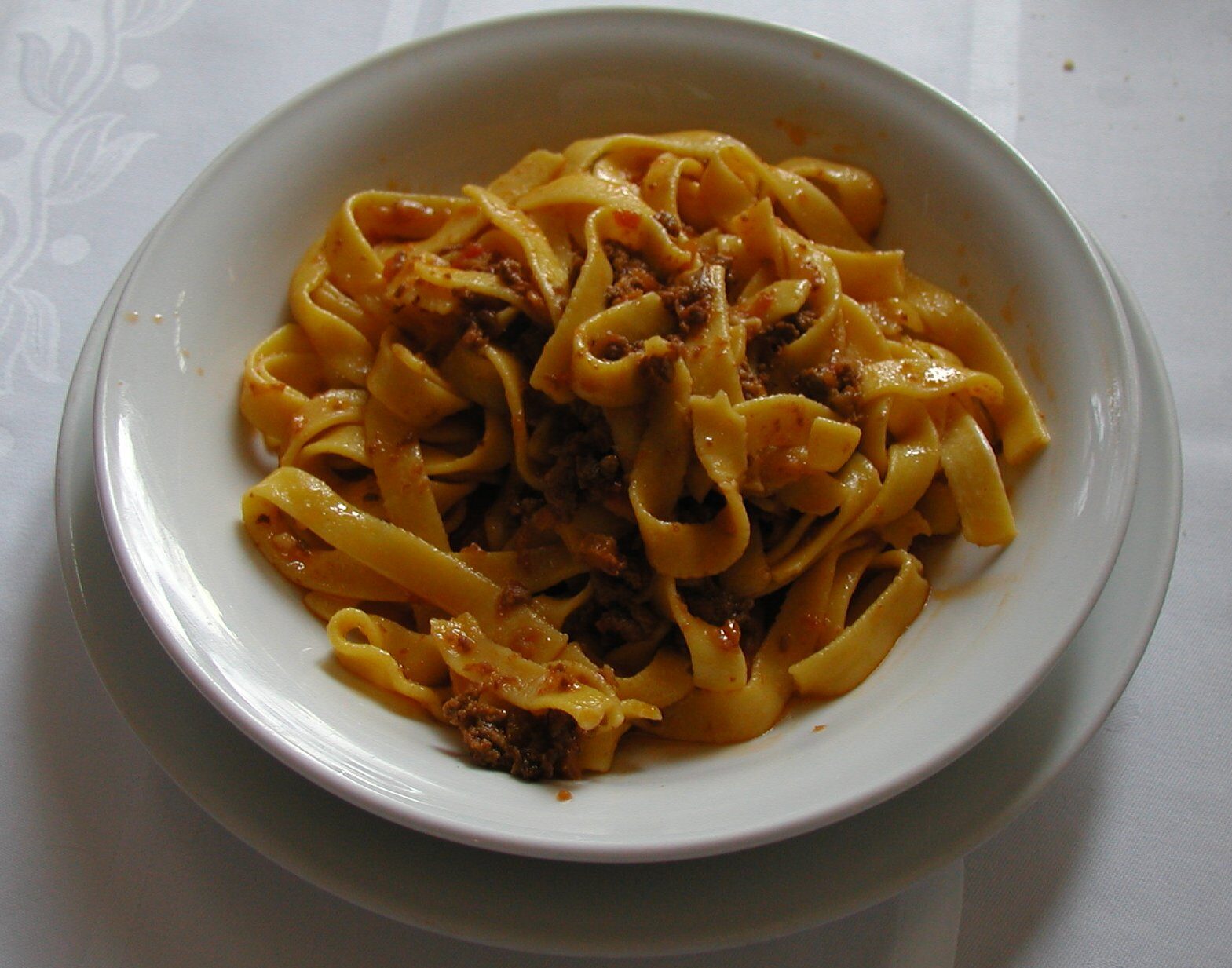
Tagliatelle al Ragù: the real “bolognese”
Forget spaghetti. Bologna's defining plate is wide ribbons of fresh egg pasta under a slow-cooked meat sauce, and once you taste the real thing you understand the fuss.
If you order "spaghetti bolognese" in Bologna you'll get a blank look. The dish the rest of the world copied is tagliatelle al ragù: long, flat, porous egg-pasta ribbons that grab a dense, meaty sauce far better than any round spaghetti ever could. It's the first thing you should eat here, and it tells you almost everything about how this city cooks.
- What it is
- Fresh egg tagliatelle + slow ragù
- Pasta width
- About 8mm cooked
- Official recipe
- Filed 1972, Bologna Chamber of Commerce
- Price
- Roughly €9–€16 a plate
What's actually in it
Two parts, both made slowly. The pasta is sfoglia, a dough of egg and soft wheat flour rolled out by hand into a thin sheet, then cut into ribbons about 8mm wide. You'll see the sfoglina, the woman who rolls it, working a giant yellow sheet in shop windows around the centre. It's a craft, and Bologna takes it seriously.
The sauce is ragù alla bolognese, and it bears almost no resemblance to the tomato-heavy "bolognese" sold abroad. The recipe the Accademia Italiana della Cucina deposited with the Bologna Chamber of Commerce in 1972 calls for beef, pancetta, a soffritto of onion, carrot and celery, a little tomato paste, dry white wine and whole milk. That's it. No garlic, no herbs, no cream, and no flood of tomato. It simmers for hours until it's thick and glossy, more meat than sauce.
How to spot the real thing
If the ragù looks red and soupy, it isn't local. Proper bolognese ragù is brown, dense and clings to the pasta. And it's never served on spaghetti. For the full story on why the foreign version exists, read why spaghetti bolognese isn't Italian.
Why the width matters
Bologna is precise about this dish to the point of comedy. There's a golden tagliatella on display at the Chamber of Commerce setting the official width: 8mm cooked, which the city defines as one twelve-thousand-two-hundred-and-seventieth of the height of the Asinelli Tower. The point behind the joke is real. A flat, slightly rough ribbon holds a heavy sauce the way no smooth tube or strand can, which is exactly why tagliatelle and ragù belong together.
A quick history
The pasta has aristocratic roots. The popular legend ties tagliatelle to the 1487 wedding of Lucrezia Borgia, with a court cook supposedly shaping the ribbons after the bride's long blond hair. It's almost certainly a tall tale, but it fits a city that has been obsessed with fresh egg pasta for centuries. Tagliatelle isn't alone in that obsession either. The same dough becomes tortellini in brodo at Christmas and the layered green lasagne alla bolognese the rest of the year.
Where to eat it in Bologna
You can get a decent plate almost anywhere in the centre, but a few places do it properly. Here's how to pick.
- Trattoria Anna Maria near the university quarter is the classic sit-down version, handmade pasta and a three-hour ragù. Book days ahead, because it fills fast.
- Osteria dell'Orsa is the budget hero. No reservations, so turn up when it opens around lunchtime and expect a queue. The pasta is genuinely fresh for the price.
- Sfoglia Rina on Via Castiglione lets you watch the dough being rolled in the window and takes walk-ins, which is handy when everywhere else is booked.
- Grassilli is an old-school lunch trattoria a short walk from the Quadrilatero market, the kind of place that makes no concessions to fashion.
For the bigger picture, see our local picks for the best restaurants and the rundown of traditional trattorias. On a budget, the cheap eats guide points you to plates under €10.
Eat it on a food tour, or learn to make it
A guided tasting walk gets you a plate of the real ragù plus mortadella and Parmigiano without the guesswork. Want to roll the sfoglia yourself? A hands-on pasta class is the souvenir you can actually take home.
Browse food tours & pasta classesHow to order like a local
It's a first course, a primo, so it comes before any meat and the portion is modest. Pair it with a glass of red. Around here that usually means chilled, fizzy Lambrusco, which cuts the richness better than you'd expect. Skip the side of grated cheese unless it arrives at the table; a good kitchen has already seasoned the ragù. And if you want to round out the meal Bologna-style, start with a board of mortadella and finish with gelato on the walk back.
Hungry to plan the rest of your eating? The full Bologna food guide covers everything from aperitivo spots to the best historic cafés. When you're not at the table, fill the gaps with our things to do and ideas for day trips from the city.