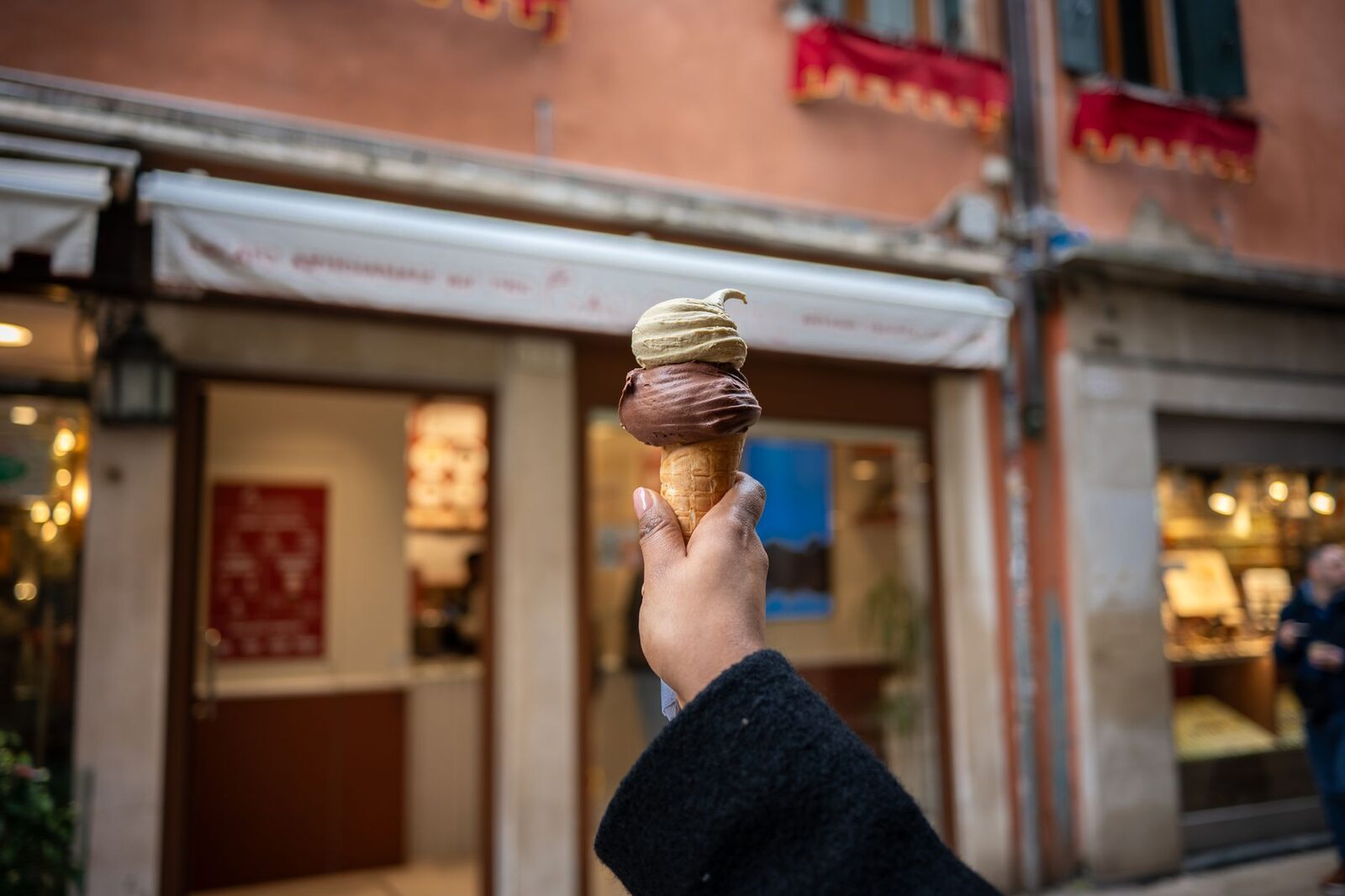
Bologna has well over a hundred gelaterias, and a lot of them are forgettable. The good news is that the best ones are easy to find once you know the names. Skip the neon-bright tubs piled into mountains near the towers and walk a few minutes to the places below, where the gelato is made fresh daily and the colours are muted, natural and a little boring-looking. That dullness is a good sign.
This is also the city that gave gelato its modern machinery. Carpigiani, the firm behind half the world's gelato machines, runs its Gelato University and Museum just outside town. So the bar here is high, and you should hold the local shops to it.
7 gelaterias worth the walk
These are the names that come up again and again, from locals and from the Gambero Rosso "Three Cones" judges. None of them are right on Piazza Maggiore, which is exactly why they're better.
Via Castiglione
La Sorbetteria Castiglione
Open since 1994 and a Bologna institution. Famous for dense, creamy classics and a smart trick: even the small cup comes with two flavours, so you never have to choose. A short walk south of the centre toward the hills.
Via San Vitale
Gelatauro
A few minutes from the towers and a pilgrimage spot for Bolognese. Sicilian and Calabrian roots show in the pistachio and almond. Organic ingredients, serious cones, and proper granita in summer.
Via Galliera
Galliera 49
Strictly seasonal, organic fruit flavours and arguably the best granita this side of Sicily. Handy if you're walking up from the station toward the old centre.
Via Saragozza area
Cremeria Funivia
Named after an old cable-car station. Everything's made fresh daily, and they hide a little chocolate sauce in the bottom of some cones. A local favourite that's worth the detour. Usually closed Mondays.
Via Santo Stefano
Cremeria Santo Stefano
Made fresh every day with high-quality ingredients, rich and intense. The location is the bonus: it's right on the way to the Seven Churches, so you can fold it into a walk.
Gambero Rosso Three Cones
Cremeria Scirocco
One of the city's award-winners, blending classic technique with unusual, sometimes savoury combinations. Go here when you want to taste what gelato can do beyond pistachio and stracciatella.
Pastry meets gelato
Barbara e Renato
The maritozzo-and-gelato crowd-pleaser: a soft cream bun split and stuffed with a scoop of your choice. Half dessert, half breakfast, fully worth it.
Local tip
The shops right next to the Two Towers and on the busiest stretch of Via Rizzoli are mostly aimed at tourists. The good gelato is a five-to-ten minute walk away in every direction. That short walk is the whole game.
How to spot real artisanal gelato
You don't need to read Italian to tell good gelato from industrial mush. A few quick checks:
- Look at the colour. Real banana gelato is greyish, not bright yellow. Pistachio is a dull khaki, not fluorescent green. Mint should be off-white, not toothpaste blue. Vivid colours mean artificial dyes.
- Look at the shape. Gelato whipped into tall, fluffy mountains is pumped full of air and cheap fats. Proper gelato sits flatter in covered metal tubs and looks like it might slowly melt.
- Look for seasons. Strawberry and peach in winter is a bad sign. Good shops change the fruit flavours with what's actually ripe.
- Read the ingredient board. The best gelaterias list simple things: milk, sugar, fruit, eggs, cream. If you can't find one, just trust your eyes.
Flavours to order
Pistachio and fior di latte (plain sweet milk) are the honest tests of any shop. From there, look for nocciola (hazelnut), stracciatella, and whatever fruit is in season. In summer, order a granita, especially at Galliera 49 or Gelatauro, where it's done Sicilian-style. After a heavy plate of the real ragù or a bowl of tortellini in brodo, a sharp lemon sorbetto is the right move.
The Carpigiani Gelato Museum
If you're a real gelato nerd, the Carpigiani Gelato Museum sits in Anzola dell'Emilia, just west of the city. It's the only museum in the world dedicated to gelato, attached to the Gelato University that trains makers from all over the planet. Visits and hands-on workshops run by appointment, so book ahead and check the official hours before you go. It's an easy trip if you're already exploring the wider region on a day trip out of Bologna.
Eat your way through Bologna
A guided food tour packs gelato, mortadella, fresh pasta and the market lanes into one afternoon, with someone who knows which shops are the real deal. Cooking classes go a step further and put you behind the rolling pin.
Browse food tours & classes
More Bologna food guides
Gelato is the easy part. For the savoury side, start with the restaurants locals rate and the old-school family trattorias. Get the pasta facts straight with our guides to the green-pasta lasagne, real mortadella and why "spaghetti bolognese" doesn't exist here. For drinks, there's where to do aperitivo, the city's historic cafés, and a primer on Lambrusco and Pignoletto. On a budget? See the cheap eats and the food markets. The full picture is on the eat and drink hub.
← Back to eating and drinking in Bologna