Bologna's food markets
Bologna has been feeding itself from the same handful of streets since the Middle Ages. The markets are where you taste the city before you ever sit down to dinner.
If you only have a morning to understand why people call Bologna "la Grassa" (the Fat One), spend it in the markets. Four of them matter: the open-air Quadrilatero, the covered Mercato di Mezzo tucked inside it, the bigger working Mercato delle Erbe a few minutes west, and the off-the-radar Mercato Albani across the tracks in Bolognina. Each has a different job, and you can hit the first three on foot in a single loop.
Here's what each one is for, what to buy or eat there, and when to turn up so you're not staring at shuttered stalls.
On this page
The Quadrilatero, the medieval market
The Quadrilatero is the grid of narrow lanes just east of Piazza Maggiore, between Via Clavature, Via degli Orefici, Via Pescherie Vecchie and Via Drapperie. The street names are the giveaway: this has been the city's trading floor since the 12th century, and each lane once held a single trade. Pescherie Vecchie means "old fishmongers," and it's still the most photographed lane in Bologna, with crates of seafood, hanging mortadella and pyramids of seasonal fruit spilling onto the cobbles.
This is an open-air market that has slowly turned into an open-air aperitivo. Old delis like Tamburini (going since 1932) and Salumeria Simoni still sell the serious stuff, but by early evening the lanes fill with people balancing plates of cured meat and plastic cups of Pignoletto. Browse, graze, and treat it as the warm-up. For the full walk-through, see the dedicated Quadrilatero food district guide.
Mercato di Mezzo, the covered food hall
Right in the middle of the Quadrilatero sits the Mercato di Mezzo, a three-floor covered hall that reopened in 2014 after a full restoration. It's the most polished and most touristy of the four, so manage expectations: this is a sit-down-and-eat food court more than a buy-your-groceries market. That said, it's genuinely handy when it's raining or when half your group wants pasta and the other half wants a craft beer and a fritto misto. You'll find fresh tagliatelle, fried seafood, pizza by the slice and a decent wine counter under one roof.
Mercato delle Erbe, where locals actually shop
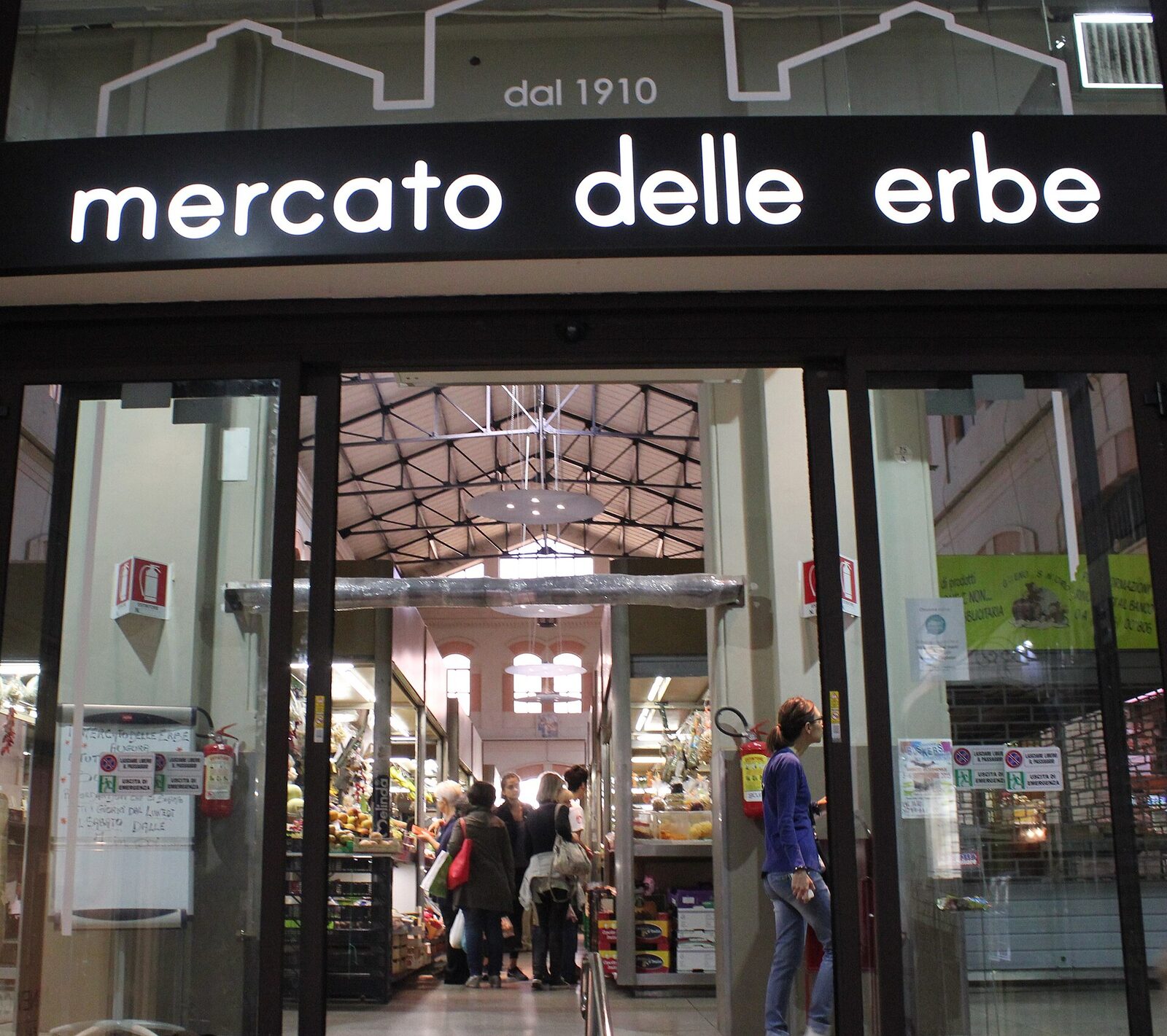
A ten-minute walk west on Via Ugo Bassi, the Mercato delle Erbe is the largest covered market in the centre and the one that still feels like a working market. It has been a vegetable market since the early 1900s, and the produce stalls, butchers and fishmongers are the real deal. A 2013 refit added bakeries, wine bars and little kitchens around the edges, so the building does double duty: groceries by day, one of the better aperitivo spots in town by night.
Come before noon if you want the market in full swing, when the produce stalls are stacked and the butchers are busy. Roll back in after 6pm and the same hall turns into a buzzing spot for a glass of wine, a piadina or a plate of seafood tapas. It's the easiest place to watch the day flip from shopping to drinking.
Mercato Albani, the local secret
Cross the railway into Bolognina, the multicultural neighbourhood just north of the station, and you reach Mercato Albani. It's smaller, quieter and almost entirely tourist-free. There's no aperitivo scene and no Instagram queue, just everyday Bologna doing its shopping. If you've already done the centre and want to see how the city eats when nobody's watching, it's a short detour worth making.
Local tip
Markets here run on the morning. Most fresh stalls trade roughly 7am to early afternoon, with many produce vendors winding down around 2pm, then the food-and-wine corners pick back up for aperitivo from about 6pm. Hours shift by stall and season, so check before a special trip. And bring cash, plenty of older stalls still prefer it.
What to buy and eat
You don't need a plan, but a few things are worth seeking out:
- Mortadella, sliced thin at the deli counter. The real Mortadella Bologna bears little resemblance to the pink "baloney" you grew up with.
- Fresh egg pasta in the window: sheets for green lasagne, ribbons of tagliatelle for the real ragù, and trays of hand-folded tortellini.
- Parmigiano Reggiano and creamy squacquerone, the soft local cheese that goes into a warm piadina.
- Tigelle and crescentine fritte, the little round flatbreads and puffed fried dough you fill with cured meat and cheese.
- A glass of local fizz, either dry Pignoletto or a chilled Lambrusco, to drink standing up like everyone else.
Hungry for more than a graze? The markets pair naturally with the city's cheapest, most honest eats and a proper sit-down meal afterward at one of the old-school trattorias or our favourite restaurants in town.
When to go
Mornings for shopping and atmosphere, evenings for aperitivo. Saturday late morning is the liveliest and also the most crowded. Sundays are dead for the working stalls, so don't build a market morning around one. If you want the history and the tasting notes without doing the legwork yourself, a guided food crawl is the fast way in.
Eat your way through the markets with a guide
A small-group market food tour gets you straight to the best stalls, the right deli counters and the dishes worth your appetite, with someone explaining what you're eating. Cooking classes that start with a market shop are a great option too.
Browse Bologna food tours & classesWant it organised for you? Compare the best food tours in Bologna or roll up your sleeves at a pasta-making class. Planning the rest of your eating? Start from the complete eat and drink guide, then see what else to do in Bologna and where to base yourself.