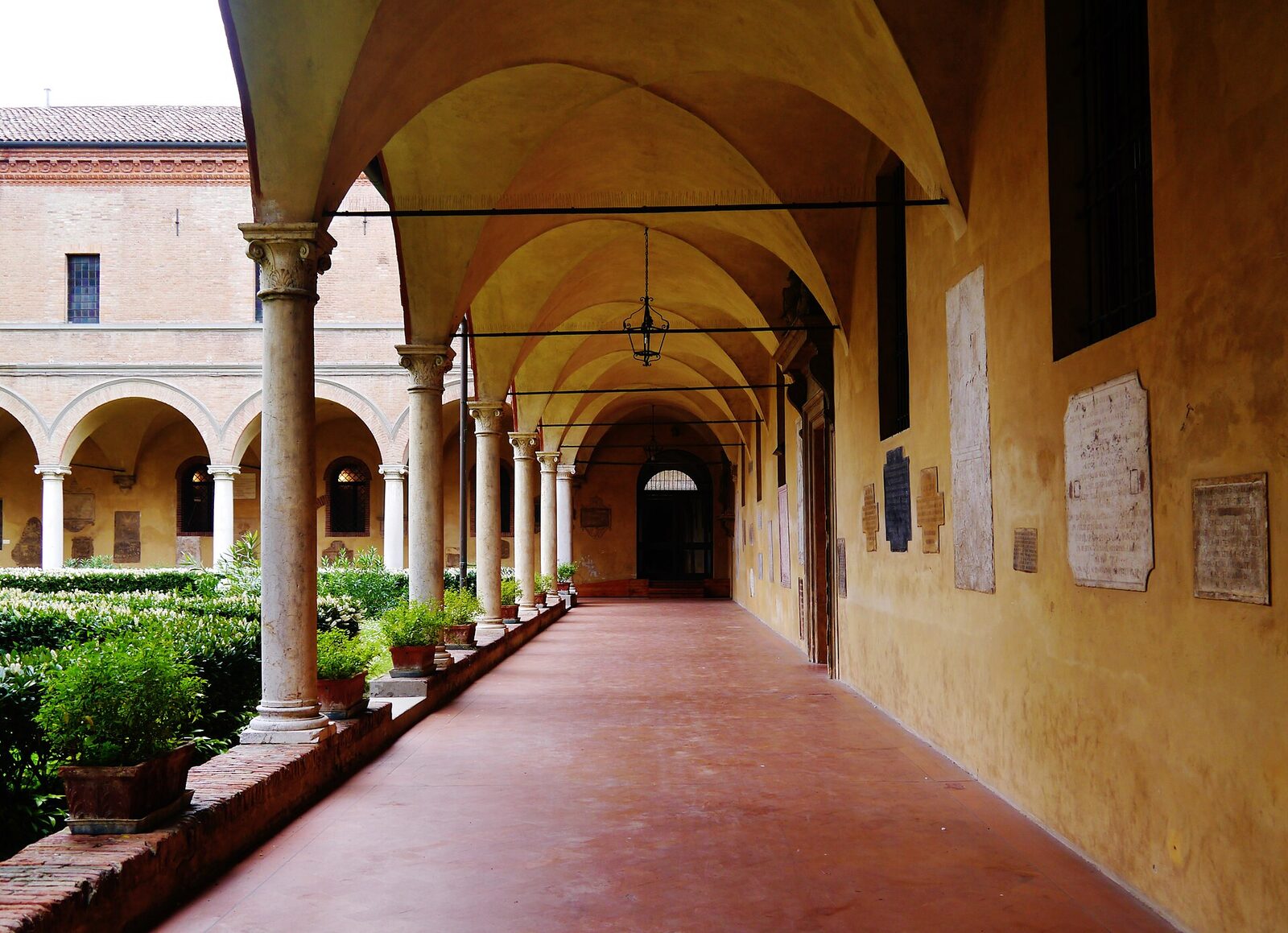
Basilica di San Domenico
A plain brick church on a quiet square that holds the tomb of Saint Dominic, and, on top of it, three small figures carved by a young Michelangelo.
San Domenico looks like nothing much from the outside: a sober Romanesque front facing its own peaceful piazza, a ten-minute walk south of Piazza Maggiore. Step inside and you get one of the most important pieces of sculpture in Italy. The Arca di San Domenico, the marble tomb of the founder of the Dominican order, was worked on by the best sculptors of five centuries, Nicola Pisano, Arnolfo di Cambio, Niccolò dell'Arca, and Michelangelo himself. Entry to the church is free.
- What it is
- Burial church of St Dominic
- Don't miss
- The Arca (tomb), Mozart's organ
- Entry
- Free (small fee for museum areas)
- Time needed
- 30–60 min
The Arca di San Domenico
Dominic, the Spanish preacher who founded the Dominican order, died in Bologna in 1221 and was buried here. The shrine you see today took roughly 500 years to finish and reads like a who's-who of Italian sculpture. Nicola Pisano and his workshop, including the young Arnolfo di Cambio, carved the main chest in the 1260s. Two centuries later Niccolò dell'Arca added the elaborate marble canopy and most of the crowning figures, he became so identified with the work that he took his name from it ("of the Ark").
Then comes the part most people come for. When Niccolò died in 1494 the monument was still unfinished, and a 19-year-old Michelangelo, in Bologna as a political exile, was hired to complete it. He carved three small statues for the crown: a kneeling angel holding a candlestick, plus San Petronio (Bologna's patron, cradling a model of the city) and San Procolo. They are easy to walk past. Look for the angel on the right and the muscular tension already visible in figures he made before the David.
Local tip
The Arca sits in its own chapel off the right aisle. The Michelangelo figures are small and high up, so it helps to know what you're looking for before you go in. The candle-bearing angel on the right of the tomb is his most famous contribution here.
What else is inside
Beyond the tomb, the church rewards a slow look. The inlaid wooden choir behind the high altar, made by Fra Damiano da Bergamo and finished in 1551, is a masterpiece of intarsia, different woods set together to build whole scenes in light and shade. Locals sometimes call it the eighth wonder of the world, and reaching it usually means passing through the small museum area, where a modest fee applies.
There's a musical footnote too. Mozart practised on one of the organs here in 1770, when he was 14 and in Bologna to study counterpoint. Look for the painting of the Mystic Marriage of Saint Catherine by Filippino Lippi in the side chapels while you're at it. The overall mood is calm and uncrowded, a contrast to the busier cathedral-scale San Petronio on the main square.
Visiting San Domenico
The basilica keeps typical Italian church hours: open in the morning, closed over the long lunch, then open again through the late afternoon, with shorter hours at weekends. It closes to sightseers during Mass. Treat any times you read online as a rough guide and check the official hours before you set out, since they shift with the season and the liturgical calendar. Dress as you would for any working church, shoulders and knees covered.
Getting there
Piazza San Domenico is an easy stroll from the centre. From the main square, head south past the old university building and its anatomical theatre and you're there in under ten minutes, all of it under cover thanks to the city's famous porticoes. The square itself is worth a pause for its two raised tombs of medieval law professors. If you're churching your way around town, pair this with the layered chapels of the Seven Churches complex, then climb the taller of the two leaning towers for the view back over the rooftops.
See it with someone who knows the stories
A guided walk of the centro storico ties the art history together, the Arca, the towers, the university quarter, and saves you guessing which small figure is the Michelangelo. Many tours add skip-the-line tower access too.
Browse Bologna walking toursStay nearby
The streets around San Domenico are quiet and central, a short walk from the Quadrilatero market lanes and the restaurants you'll want for dinner. See our pick of where to base yourself in Bologna, or search hotels in the historic core directly.
Hotels near San Domenico
Staying inside the centro storico means you can walk to almost everything, this church included.
Check hotel availabilityBefore you go, sort out the practicalities on our getting around Bologna page, line up a few day trips into Emilia-Romagna, and work out where to eat the real tagliatelle al ragù.